OUR TITLES
 The forty-seven ronin
A true tale of honor and vengeance. In 1701 a young daimyō named Asano Takumi-no Kami attacked the shogun’s official, Kōzuke-no Suke, and for this act was sentenced to death. Being aware that their master had been provoked by the mean and spiteful officer 47 samurai formerly in service of the deceased daimyō plotted to avenge him. However, in order to make their plan successful, in the first place they have to renounce everything which has been dear or sacred to them. The story of revenge of the 47 rōnin, recorded in 1871 by Algernon Mitford, has long been considered the most accurate account of the events.
|
|||||
|
Ayashi
An anthology of nine ghost stories set in historical Edo.
In Japan during the samurai era, fate was rarely kind to women. Reduced to servants, sexual objects, or mere decorations, abandoned as soon as their beauty faded, dependent on their fathers, husbands, and sons, they had no recourse for justice when they abused their position… at least not while they were alive. It's no wonder, then, that in the ghost stories that the residents of Edo eagerly indulged in on hot summer evenings, the most terrifying ghosts were the wronged women.
Miyuki Miyabe, author of bestselling crime novels, offers readers a refreshing collection of fantasy stories that only seem to refer to times long past, yet can also be read as a remarkably apt commentary on the present. It has long been known that human jealousy, suffering, desire, and loneliness always and everywhere bring terrible consequences, and life writes the darkest scenarios...
Translated from Japanese by Michał Chodkowski
|
|||||
|
Japanese fairy tales
A selection of most popular Japanese fairy tales, including The Tale of The Bamboo-Cutter, Momotarō or The Demon of the Rashomon Gate. These are the stories which Japanese children know by heart, but even adults can still find them didactical. They are deeply rooted in Japanese culture and their traces can be found in numerous works of contemporary art or pop culture, so familiarity with those legends is essential for each and every Japanese folklore or culture fan or researcher.
|
|||||
|
Japanese fairy tales vol. 2
The second volume of "Japanese fairy tales" will guide you again to the world of Japanese ghosts, demons, brave warriors, noble ladies and unusual creatures. It includes such famous Japanese stories as "The Snow Lady", Issunboshi" (or Japanese Tom Thumb), "Magic tea pot" and many, many more.
|
|||||
|
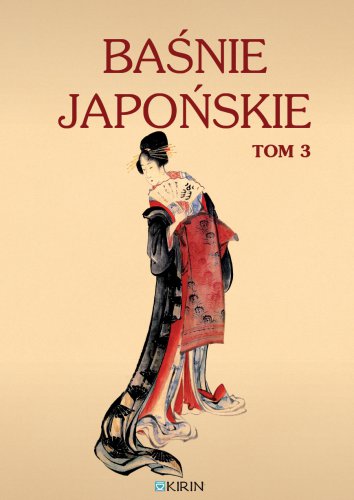
Japanese fairy tales vol. 3
Japanese fairy tales feature various characters: people – both wise and stupid, honest and cunning, rich and poor – but also animals, plants, demons, or even gods. They provide a glimpse to the lively world of folk fantasy, but also to the common people’s morality, there the cruel and the conceited meet their well-deserved punishment, while the good-hearted are properly rewarded.
|
|||||
|
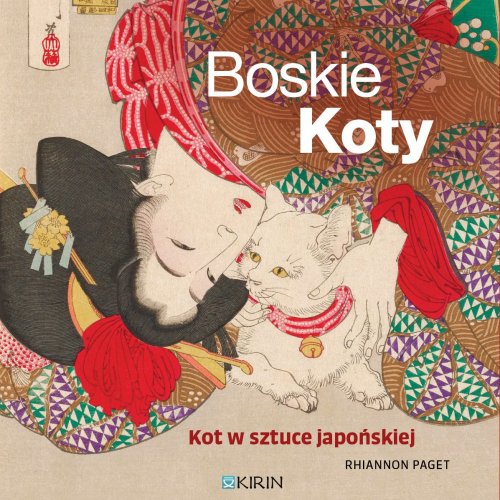
Divine felines. The cat in Japanese art
From Hello Kitty to Maneki Neko—Japan is the epicentre of global cat culture!
Whether lurking in corners or taking center stage, cats are a ubiquitous presence in Japanese art. Depending on the situation, they may invite good fortune, prompt the viewer to meditate on a tale or provide evidence of an unseen world of magic and supernatural happenings.
In 200 charming woodblock prints, paintings, screens and figurines spanning three centuries, Japanese art expert Rhiannon Paget celebrates the rich symbolism and surprising stories surrounding the feline image in Japan.
|
|||||
 Bushidō. The samurai ethos from war tales to the Pacific War
Bushidō is sometimes referred to as the samurai code of honor, which may be misleading, as in the era of the samurai there was no written code of conduct of this social class and at the same time many spectacular victories took place due to disloyalty or insubordination in the ranks of the enemy. Moreover, the term itself was not widely introduced until the 20th century. In fact what we now call bushidō, is the samurai ethos, molded for centuries by war stories, legends, as well as by philosophical treatises or ethic guides of the members of the samurai class. The book traces the most important elements which constitute the ethos of the samurai, analyzes the ideas the samurai had on the role of their class and the position in the society, and finally – it shows how bushidō emerged in the 20th century – as a tool of war propaganda and later, as a popular theme in mass culture.
|
|||||
|
A boy from Ibaraki. Noguchi Ujō and nostalgic dōyō
Noguchi Ujō (1882–1945), the eponymous boy from Ibaraki, was one of the greatest Japanese children's songwriters. He was the initiator of the first literary movement in Japan to modify traditional literature, music and art for children. He was also a co-creator, theoretician and master of the genre of dōyō: nursery rhymes of great artistic value, written with the youngest children in mind. The book presents the biography of the author, introduces the evolution of the genre of children's literature in Japan along with its varieties, presents and analyzes selected works by Ujō, and as a conclusion it outlines his place in the cultural landscape of contemporary Japan.
|
|||||
|
Shadows from the North
A sequel to „Scars on the Moon”. Nine-year-old Date Masamune has already experienced the dark sides of being a daimyō’s heir. Even though his disability makes many people avoid him, the young boy starts to show talents and ambitions which soon will elevate him to the position of one of the most powerful warlord of Japanese Age of Warring States (1568–1603). However, it seem that a traitor hides in his nearest surroundings and his abduction is only a very beginning of dramatic events which are yet to come. Will his faithful retainer and friend Kagetsuna be able to protect him from the worst? A novel based on a real history set in 16th-century Japan.
|
|||||
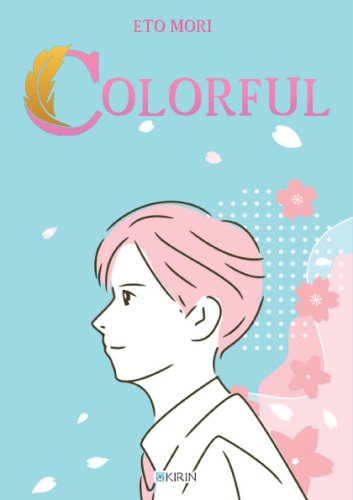
 Colorful
DISCOVER ONE OF THE MOST POPULAR NOVELS FOR TEENAGERS IN JAPAN!
"Congratulations! You win our lottery!"
Usually, the soul of a deceased person who committed a crime during his of her life is removed from the cycle of reincarnation as punishment, but every now and then an exception occurs – if they win the heavenly lottery, they receive a second chance, and if they succeed, they can be reborn on Earth.
However, not everything is as simple as it might seem…
When the "chance" turns out to be spending some time in the body of a boy who attempted suicide and facing all the problems he had to face, even a hardened criminal may prove too weak. Fortunately, his personal guardian angel named Purapura comes to his aid. But will this be enough to succeed?
|
|||||
|
Cool Japan. Self-representation of Japan in its popular culture
„Cool Japan” is a slogan adopted by Japanese government as a name for an operative program aimed at promoting Japan overseas by means of what appeals to young people: popular culture, fashion and technology. In recent years, more than a decade from the program’s launching, the researchers all over the world have been debating on the mechanisms and effects of the strategy. It was also an object of discussion in Poland, resulting in publication of this book, which traces what image of Japan is conveyed by the products of its popular culture – movies, music or comic books.
|
|||||
|
The Mermaid and the Red Candles
The trio of Japan's most distinguished fairy tale writers – along with Kenji Miyazawa ("Night on the Galactic Railway") and Nankichi Niimi ("Gon the Fox") – is completed by Mimei Ogawa, known as the "father of Japanese children's literature." Like the other two authors, he believed that works read by young children should be beautiful and full of sensitivity – which by no means meant naive and filled only with merry content. Having lost two children due to his own difficult financial situation, he understood the tragedy of the poor and those who face ostracism and insensitivity because of their situation like no other.
Among the fifteen works included in this collection the reader will find the author's most famous fairy tales, such as "Red Candles and the Mermaid," "Field Rose," and "A Village Without Clocks," in which, as in life, human joys and sorrows intertwine.
Translation from Japanese: Mateusz Gwóźdź
Illustrations and calligraphy: Joanna Zakrzewska
|
|||||
|
Humanity without borders. Dimensions of culture in the work of Akira Kurosawa.
Akira Kurosawa is one of the most famous Japanese film directors, but at the same in Poland – one of the most undervalued. This situation results from focusing on his works as on epic stories on feudal Japan and its samurai, while the works on daily struggles of the Japanese after World War II, as well as on essential social and existential issues remain underestimated. Kurosawa is also one of the most inspiring artists, not only within the medium of cinema, but also in terms of comic books and animation. The aim of this book is to present those themes in the films of Kurosawa, along with a commentary. Its unquestionable asset is also the fact that the authors, who represent various academic centers from Poland, Germany and Japan, offer a new approach to the works by this director.
|
|||||
|
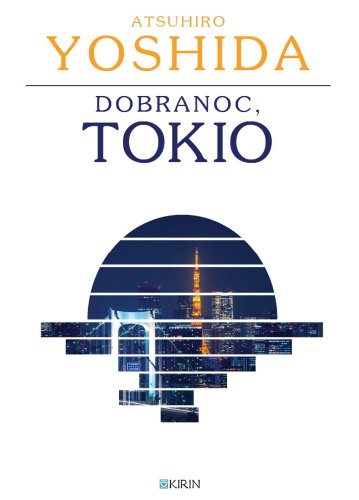
Goodnight, Tokyo
A dreamlike story that will take you through a Tokyo rarely seen.
The clock has struck one. Tokyo is asleep, but among the deserted streets and darkened buildings, people are awake. A film stage manager who must acquire peculiar props for a movie before dawn. A hotline worker tormented by the mystery of her brother's disappearance. A famous detective who couldn't stay put for long. A restaurant worker missing a customer. A taxi driver who wanders between them, helping them not only to reach their destinations. Ten intertwined fates of people who constantly pass each other at night on the streets of the world's most populous metropolis. A beautiful, warm, and brilliant story about unpredictable life choices, about being lost and feeling lost, and about how sometimes happiness requires much less than you suspected… Translated from Japanese by Anna Grajny
|
|||||
|
Summer quakes
12-year old Date Masamune is a worthy heir of his father, the daimyō of Yonezawa. Tamura clan seeks alliance with Date, by offering the daughter of the clan’s head as is wife. Kagetsuna and his sister Kita decide to visit Miharu in order to inspect the prospects for the agreement. Who is the mysterious princess Yoshihime and why does her family avoid presenting her in public? Who is displeased with the anticipated alliance? The way to both clans’ union proves to be more complicated than one could ever foresee and the earthquake at the beginning of the mission occurs to be only a prelude to further dramatic events.
|
|||||
|
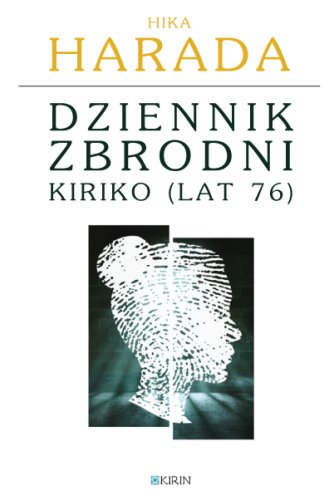
Kiriko's Crime Diary
Theft, forgery, kidnapping – what will desperation drive you to do?
After the death of her friend and roommate, 76-year-old Kiriko Hitotsubashi finds herself alone in the world, and her pension proves too small to support her continued existence. She decides to commit a crime – then, of course, she will inevitably end up in prison, where she will be provided with a roof over her head, medical care, regular meals, and companionship. However, it's one thing to devise a plan, and quite another to carry it out... The adventures of a kind elderly woman who becomes increasingly desperate to finally commit a crime are a warm and engaging story, but behind them lies the grim reality of Japan's failing social welfare system.
Translated from Japanese by Magdalena Rokita
|
|||||
|
Evolution of the image of male homosexuality in Japan in culture, literature and legal texts from Edo period to modern times
The books presents the changing image of male homosexuality in Japan over the centuries. It starts with analyzing the oldest references to relationships between men in Japanese literature and the monastic practice of nanshoku. Afterwards, the author leads the reader through the world of earthly pleasures in medieval city of Edo, the issues of prostitution and a warrior’s ethos of mutual loyalty and faithfulness between brothers in arms, which ended in the 19th century, when under the pressure of the West Japanese authorities condemned such relationships. The final part of the book shows the contemporary image of male homosexuality in Japanese popular culture and the challenges it faces: discrimination, coming-out and same-sex marriages.
|
|||||
|
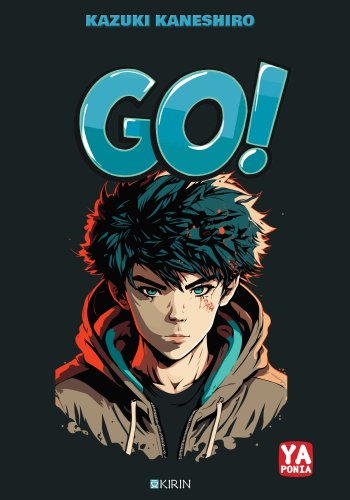
Go
High school student Sugihara has a reputation as the school's toughest man: out of twenty-three fights, he's never lost a single one. However, no one knows that beneath his bullying exterior lies a sensitive boy with a kind heart – and no one can find out, otherwise his everyday life would be unenviable. Sugihara is a Zainichi, a descendant of Koreans, a member of a Japanese ethnic minority that is discriminated against at every turn and linked to the criminal underworld.
One day, Sugihara meets the love of his life, the beautiful Sakurai. The couple falls in love, but the idyll only lasts until he reveals his origins to her. Does this Japanese Romeo and Juliet romance have any chance of lasting?
Kazuki Kaneshiro is a Japanese writer of Korean descent (Zainichi). He received the prestigious Naoki Prize in 2000 for his novel "Go," partly based on his own experiences.
Translation from Japanese: Mateusz Gwóźdź
|
|||||
|
Iconography of manga
Manga has won the hearts and seized the imagination of millions of readers around the world. By the end of the 1990s, from the cultural phenomenon of mass entertainment it has developed into a multi-angle field of research, the area for interdisciplinary studies. This book focuses only on a narrow scope among the innumerable topics and approaches, which may be applied to manga: its relation to art, both Japanese and Western. Its various ways of influencing Japanese comics are discussed on the examples of eight manga artists: Sugiura Hinako, Mizuki Shigeru, Maruo Suehiro, Hanawa Kazuichi, CLAMP group, Nao Tsukiji, Takeuchi Naoko, and Ueda Miwa.
|
|||||
|
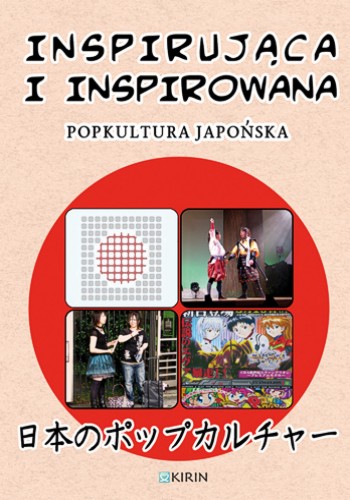
Inspiring and inspired. Japanese pop-culture
Ten authors of this book present diverse aspects of Japanese popular culture: cinema, comic books, animation, music or revue, where Western influences are traceable. They also point at cases of reverse situation, when a purely Japanese product served as a source of inspiration for Western interpretation. They also analyze the potential effect which Japanese pop-culture may exert on global high culture, consumer habits or even on international relations.
|
|||||
|
Restaurant of Many Orders
Kenji Miyazawa's (1896-1933) short story "Restaurant of Many Orders", originally published in 1924.
|
|||||
|
Japan renounces war forever
„Japan renounces war forever” – this is the beginning of the 9th article of Japanese constitution, which warrants the country’s peaceful policy. Japan adopted it after the dreadful experience of the Second World War and the trauma resulted from the atomic bombing of Hiroshima and Nagasaki, in order to prevent the country’s plunging into war again. However, is this resolution still justified while the situation in Asia is so unstable? Is it not just a facade, taking into account that Japanese Self-Defense Forces, while not being officially an army, remain one of the best equipped forces in the world? The author presents in accessible manner the circumstances which led to creating Japanese post-war constitution, the original assumptions of the anti-military policy of the country, as well as the idea and a mode of operation of Japanese Self-Defense Forces. He also sketches the current geopolitical situation, along with the threats and opportunities it arises, the potential ways of development of Japanese safety strategy, with special regard to the country’s relations with its neighbors and partners, as well as to Japanese industry, trade, diplomacy, space exploration and national sentiments.
|
|||||
|
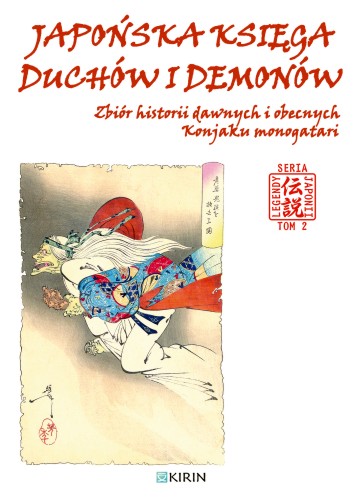
Japanese book of ghosts and demons. Konjaku monogatari.
Konjaku monogatari shū is a 12th century collection comprising originally over a thousand of setsuwa (Japanese anecdotes) on various subjects. The presented book is its 27th volume, dedicated entirely to ghosts, demons and mysterious occurrences. The tales within it, passed down from one generation to the next, were aimed to amuse, terrify or warn. The reader may learn from them why it is not advisable to penetrate solitude places or to stay overnight in desolated buildings. Those stories reveal Japan as it was in the times when in the streets of the capital city you could meet eye to eye with a demon, while a beautiful lady in your company might have been in fact… a vixen.
|
|||||
|
Cyberpunk in Japan. From avant-garde transgressions to popular cinema
Cyberpunk as a subgenre of science fiction emerged in the West in the 80’s. Despite the fact that it had a profound effect on creating a similar genre in Japan, due to the cultural and language barriers it did not serve as its only source of inspiration. Japanese cyberpunk was influenced by both Western literature and cinema as well as by the native folklore, novels, comics and even avant-garde theatre or the ero-guro-nansensu movement, in effect giving birth to a distinctive genre, completely different from its Western counterpart. The book traces the history of cyberpunk in Japan and the origins of Japanese cyberpunk, emphasizing the possible sources of inspiration of its authors, the most important movie directors along with their most important works. It also presents the probable future of the genre in the West and in Japan.
|
|||||
|
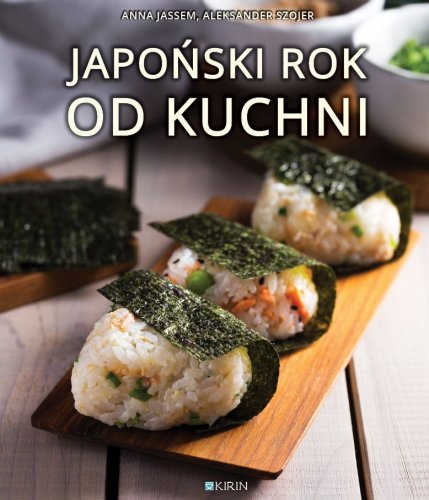
Japanese cooking for four seasons
The book takes the reader on a journey through Japanese seasons: their specific food, customs and festivals. Every season is accompanied by recipes for delicious Japanese dishes which are easy to prepare at home, using seasonal ingredients available in Europe. The authors of the recipes are the Japanese who teach Japanese cooking not only in their home country, but also in Europe, which is why their dishes are easy for preparing outside Japan. They also share with their personal experiences, stories and thoughts, giving the reader a profound insight into Japanese psyche and daily life. The book is illustrated by artistic photographs of Japanese seasons, customs and dishes.
|
|||||
|
Japanese soft power. The influence of Japan on Western culture
The book presents various areas in which Japan exerts influence on the West – diplomacy, economy, literature, art, and popular culture. Instead of just listing the facts or trends, the authors seek answer to the question of how Japan’s actions – both intended and unintended – shape the country’s image in the eyes of its foreign partners.
|
|||||
|
Learning Japanese with games - part I: Hiragana and katakana
Learning Japanese has never been so easy. This is not a regular textbook! It is a set of various games (memo, bingo, sudoku etc.) useful during lessons and at home.
|
|||||
|
Japanese kokeshi dolls
Kokeshi are the iconic wooden dolls from Japan. Traditionally crafted in the remote northern Tohoku region, they are characterized by their cylindrical shape and lack of arms and legs. The book presents traditional and contemporary kokeshi by artisans in Japan as well as overseas, where this folk art is now in popularity.
|
|||||
|
I'm Kazu.
In 2011 Kazu was nineteen. He decided to visit Poland just because… he saw it on the map. Prior to his trip the only source of his knowledge on this country was Youtube, so when finally there, he discovered that not everything was exactly the same as in other parts of the world – starting from language to shopping and cuisine. Four years later he is determined to visit Poland again. This time he feels well-prepared – he knows Polish, has several friends within the country and he has already arranged the accommodation. But is this enough to avoid cultural shock? A hilarious, but also educative story on both Japanese and Polish.
|
|||||
|
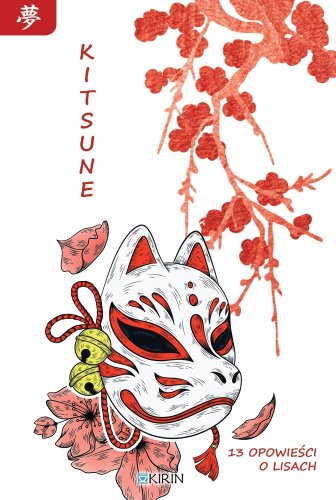
Kitsune. 13 tales about foxes
The fox is one of the most important animals in Japanese folklore. It appears in numerous Japanese legends and fairy tales, wherein it is more than just a cunning fellow, like in European tales. Not only can it deceive a human with a wide range of trick, but it is also able to manipulate its victims, using them as living puppets, while gradually sucking their life from them. However, there is also a second side to it: it is a creature which repays every debt of gratitude, and also serves as a messenger of one of the most important deities in the Japanese animistic pantheon - Inari, god of crops and fertility.
In this collection, which consists of 13 works by eight Japanese writers, the reader will encounter varied representations of foxes. While in some stories they are dangerous and sinister creatures, in others they show their gracious, even amusing nature.
|
|||||
|
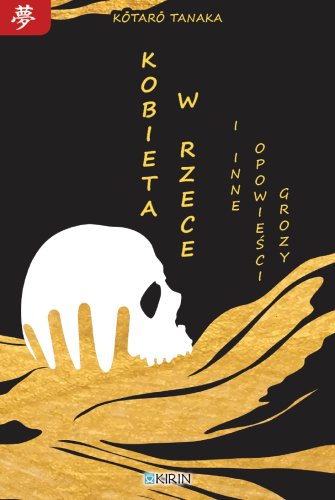
The Woman in the River and Other Ghost Stories
Tales of the extraordinary, mysterious, and even terror have always captivated people. The Japanese were no exception, even creating a special literary genre called kaidan (literally, "strange tales"). During the samurai era, they practiced the so-called hyakumonogatari kaidan-kai – nocturnal parties featuring ghost stories. The primary function of these narratives was entertainment, hence some of them are tinged with dark humor or have a surprising punchline. Others might also provide a moralizing function or criticism of the prevailing social and political order.
Although the samurai era in long gone, kaidan stories remain popular in Japan. This collection features fifteen short stories by one of the 20th-century masters of the genre, Kōtarō Tanaka. They present a diverse approach to the subject: from stories inspired by classical Japanese and Chinese prose to urban legends contemporary to the author. Translated from Japanese: Agata Zielezińska Illustrations and calligraphy: Joanna Zakrzewska
|
|||||
|
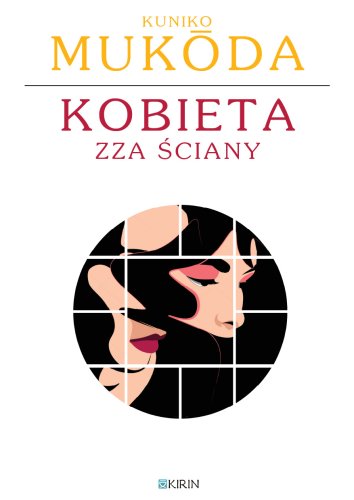
The woman next door
A collection of short stories by the tragically deceased writer and winner of the prestigious Naoki Award.
Sachiko, living in a passionless relationship, jealously eavesdrops on her neighbor, who leads a rich love life, until she decides to step into her shoes.
Motoko has a serious problem: her body emits a scent that no one can stand except Kazuo, her lover. However, their joint visit to the girl's father makes her realize how little she knew about her boyfriend.
The rational Momoko helps Rie, a colleague from work, prepare for a wedding... which should have been her own.
Kōichirō discovers he has a brother he never knew existed, but their attempt to make up for lost time in their relationship turns out to be more complicated than the thought.
The non-outstanding Naoko decides to lie to get Kazami's attention.
Kuniko Mukōda skillfully paints portraits of ordinary people grappling with loneliness, difficult relationships, and desperation for even a shred of happiness. The writer died in a plane crash in 1981, at the peak of her popularity.
Translated from Japanese by Mateusz Gwóźdź
|
|||||
|
Romances of old Japan
A third volume of the best-selling series "Legends of Japan". It contains eleven stories about lovers - married and engaged couples, but also about jealous admirers and supernatural creatures.
|
|||||
|
Anti-stress coloring book for adults - Japanese fantastic creatures
Need to keep you hands or mind busy? Or to the contrary, you are looking for relax? Try our anti-stress coloring book! It contains 32 illustrations inspired by Japanese fantastic creatures, by Polish artist Magdalena Albińska. Each of them is accompanied by a short description, from which you can learn: - which animals are considered lucky in Japanese culture? And which of them is advisable to avoid? - how did the residents of Japanese north outwitted devils? - why it is not a good idea to approach beautiful ladies by the seaside? Enjoy your time!
|
|||||
|
Japanese comic books in Poland. History and controversy
The most extensive and current source of knowledge about manga in Poland. The book is an effect of the author’s research on the fifteen-year presence of Japanese comics on Polish market. However, it also presents the circumstances which brought manga outside the country of its origin – to the United States, France, Italy and Germany, along with its reception in those countries. The introduction to the main topic shows the cultural background in Poland prior to publishing the first Japanese comic in this country: the attitude of the Polish people to comics in general, their knowledge on Japanese sequential art or the scarce occasions when Polish people might (unconsciously) enounter manga. This part is followed by a chapter presenting the process of popularization of Japanese comics in Poland, while a separate section is dedicated to the controversies which arouse in result.
|
|||||
|
A landsape of fantasy. Harajuku in transcultural view
Lily Adamowicz's monumental work documents a range of pop culture phenomena that originated or evolved in Harajuku, an area of Tokyo's Shibuya Ward, widely associated with unique, extravagant youth fashion and cosplay (dressing up as pop culture characters). The researcher presents the history of this area, along with the factors that shaped its unique character, such as the American occupation, the 1964 Olympic Games, and the development of department stores and fashion centers. She also provides the reader with an overview of the youth subcultures that flocked to Harajuku, iconic fashion and lifestyle magazines, the local music industry, and trends that continue to characterize this area, most notably Gothic Lolita fashion. A key element of this work is the concept of transculture, the interpenetration and intertwining of elements from different cultures, which can result in the creation of an entirely new quality, free from ethnic, gender, or religious constraints. In this perspective, Harajuku becomes more than just a physical place in Tokyo – it becomes a global land of eternal fantasy and unbridled freedom of self-expression.
|
|||||
|
Scars on the Moon
Date Masamune was one of the most outstanding Japanese warlords of the Warring States period (1568–1603)… ... but in 1571 he is only five and seems a quite an ordinary boy - except for the fact that he is a son of a daimyō in Mutsu Province. However, dark clouds start to gather over his head, especially as in the country, already in military chaos for some time now, a process of emerging a new balance of power has already begun. On top of this, a plague strikes the neighborhood. In order to survive all those hardships, young Bontenmaru – as Masamune was called in his childhood – will need a faithful and reliable guardian. Will the 15-year-old Kagetsuna bear the responsibility? Scars on the Moon is more than just a fictionalized biography of young Masamune; it is also a detailed account on the culture of Japan in the age when the country was divided into numerous contending states, the supremacy of Ashikaga shogunate had come to the end and most people believed that diseases were caused by demons.
|
|||||
|
Japanese dolls. The origins and contemporary forms
Human representations have been present in Japanese Archipelago since prehistoric times. The oldest Japanese humanoid figures are dated back to 7 500 B.C. The objects that are now referred to as ningyō – which in the West is translated as “dolls” – in ancient times served many purposes and hardly ever were used as toys. The ningyō functioned as talismans and ritual items, as decorations, souvenirs or an adequate gift for certain occasions; they were even treated as fetishes. This book is an introduction to the vast topic of Japanese dolls; it presents their origins and numerous functions, but also shows their present-day forms and their role in contemporary Japanese culture.
|
|||||
|
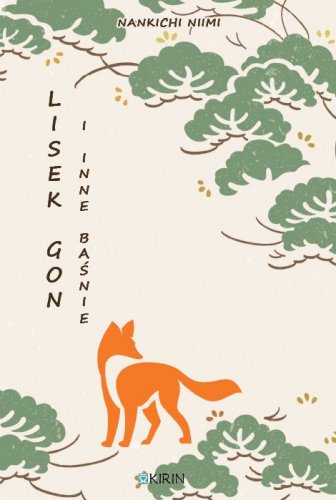
Gon, The little fox and other stories
Nankichi Niimi (born Shōhachi Watanabe, 1913–1943) is sometimes called „ Hans Christian Andersen” of Japan. Due to his short life (he died of tuberculosis at the age of 29) he left only a little number of works, mostly poetry. Nevertheless, his fairy tales are read and loved by all children in Japan. The author’s profound sense of humanism, his love for nature and impressing observations skills, as well as his subtle sense of humor make the stories enjoyable also to older readers all over the world. This compilation contains most famous works by Niimi, such as “Hananoki Village and the Thieves”, “Buying Mittens” or “A tale of the giant” – and most of all “Gon, the Little Fox”, but also less known tales, which have never been translated to any foreign language.
|
|||||
|
The Dragon Painter
Beautiful story about love, art and Japan from the beginning of the Meiji period; written by Mary McNeil Fenollosa, a wife of one of the greatest explorers of Japanese culture. In the 19th-century Edo, recently renamed to Tokyo, lives old master of ink painting – Kanō Indara, the last of the line of the most famous artists of the past era. Just when he is distressed about not having a proper heir, he meet Tatsu, a young genius of brush. The youth's unusual talent charms the old master so much that he completely ignores the man’s story about being engaged to… a dragon’s daughter. The story has been adapted to a movie by a famous Japanese-born actor, Sessue Hayakawa.
|
|||||
|
Cat's town
Cats are one of the favorite animals of the Japanese, although they were once credited with supernatural abilities: the ability to shapeshift, walk on hind legs, drink the blood of their owners, and even pull the dead from their graves. It's no wonder that their ambiguous, intriguing image has long been a favorite among writers.
"Cat Town" is a collection of ten short stories by eight Japanese authors who depict these animals in various ways: as fairy tale characters, menacing monsters, even ghosts, or projections of a troubled mind. The entire volume is preceded by an introduction that explores the history of cats and legends about them in Japan, the local "cat" literature, and profiles of the writers whose works are included in this volume. Authors of the collection: Kenji Miyazawa ("The Wildcat and the Acorns"), Kōichirō Miyahara ("The Tale of the Rainbow Cat"), Mimei Ogawa ("The Old Lady and the Black Cat"), Kyūsaku Yumeno ("Cat Thief"), Kōtarō Tanaka ("The Cat Dance," "The Grave of the Righteous Cat"), Fuboku Kozakai ("The Cat and Muramasa"), Jūza Unno ("The Transparent Cat"), and Sakutarō Hagiwara ("Mrs. Warson's Black Cat," "Cat Town").
Translated from Japanese by: Michał Chodkowski. Illustrations and calligraphy by: Joanna Zakrzewska.
|
|||||
|
A myth of zen and the shaping of Japanese arts
There is a common opinion that Zen Buddhism is a heart of Japanese culture and the key for its understanding. The authors who claim that often quote a number of so-called “Zen arts”, i.e. the forms of expression which are rather a way of spiritual development than an artistic activity. In the first place they mention chadō – “the way of tea”, haiku poetry, the art of gardening, ink painting and calligraphy, but also martial arts, such as kendō or kyūdō. The book presents the history of Zen in Japan, its influence on the selected arts, referred to as “Zen arts”, but at the same times it analyzes critically the misinterpretations which arouse around them. The summary offers a rational evaluation of the conception of the “Zen arts”.
|
|||||
|
Ainu folk tales
The Ainu are an ethnic minority in Japan, living primarily on the northernmost Japanese island of Hokkaidō, although there were also small populations of Ainu living on the island of Sakhalin and in the Kuriles until the end of World War II, when the Soviet Union took control of Sakhalin and the Ainu there fled. Ainu literature was traditionally of an exclusively oral variety, and very little was reduced to writing in any language before the 19th century. Many of the stories occur in more or less lengthy poems known as yukar, which are an epic-like form. Many of the stories presented in this book also occur in the context of much longer and deeper stories, which is not made apparent; more than likely because the importance or even existence of the yukar was unknown to the author.
|
|||||
|
Haunted Japan: Exploring the World of Japanese Yokai, Ghosts and the Paranormal
Catrien Ross shows Japan from the perspective which is usually ignored by a civilized, rational world. She invites the Reader to a unique journey through physical places on the archipelago where the material meets with the spiritual. The Author guides us to the very entrance to Hell and lets us have a glimpse at the River of the Dead. She introduces us to a cafe owner who gives free shows of his supernatural powers. In her company, we will visit an alleged grave of Jesus Christ, who – according to the local legend – escaped his death in Jerusalem, while a minute later we will take a look at the most haunted skyscraper in Tokyo. We will meet the leaders of contemporary sects and a real-life Sadako from The Ring. Regardless of whether you believe in the phenomena and the legends reported in this book or not, they remain an important element of Japanese folklore and everyday life and present an extremely interesting part of spiritual life of the Japanese.
|
|||||
|
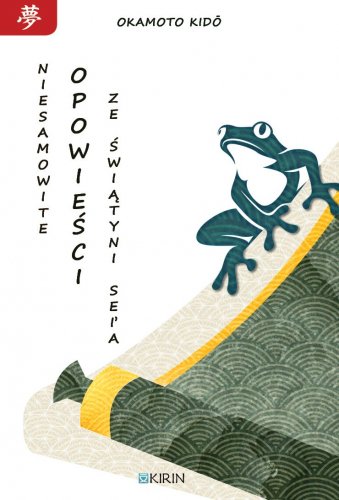
Sei'adō kidan
An eccentric haiku master nicknamed Kinka, the self-proclaimed High Priest of the Sei'a temple he founded, organizes an extraordinary meeting where participants are invited to share bizarre stories. These are not typical ghost stories, but accounts of events that are difficult to consider everyday or ordinary. A monkey mask that drives people mad. A crippled girl who feeds on human blood. A curse cast with an inconspicuous yellow note.
The temple's name refers to a frog in a well, a person with limited horizons. What will prevail in the participants: rational thinking, as unwavering as the stone walls of a well, or the intuition that not everything in this world can be grasped with reason? And what will prevail in the reader?
Translated from Japanese by Michał Chodkowski. Illustrations and calligraphy by Joanna Zakrzewska.
|
|||||
|
Night on the Galactic Railway and other stories
Nighthawk is disliked by other birds for his ugly face and gets bullied by a mighty hawk. Gauche, a cellist in a local orchestra, the worst musician in his group, a week before a major concert gets unusual, night-time visits. Giovanni works hard to make a living for himself and his sick mother, even though he’s still a child. On one night – a night of the Centaurus Festival – he and his best friend Campanella board a mysterious train, which takes them for an unusual ride across the night sky. „Night on the Galactic Railway and other stories” presents three most famous stories by Kenji Miyazawa (1896–1933), a beloved author of all young Japanese, whose timeless humanism and the stunning power of imagination enchants the readers across the globe.
|
|||||
|
Midnight swan
A moving novel about sexual minorities in Japan.
Nagisa dreams of becoming a woman. In order to raise money for a sex reassignment surgery, she works in a nightclub, where she dances to pieces from "Swan Lake" ballet. When her cousin is deprived of parental rights over her child, she sees paid care for the neglected, abused Ichika as her chance to raise the desired amount. Unexpectedly, however, between the cynical materialist and the lonely, unloved girl, gradually develops a bond which will cause Nagisa's world to be turned upside down, and she will find herself capable of making an ultimate sacrifice. Translated from Japanese by Monika Szyszka
|
|||||
|
Shades of kawaii
Kawaii (Jap. cuteness) is an aesthetic trend most commonly referred to in regards to the contemporary Japanese culture. However, is it really only a recent phenomenon, a form of protest of young Japanese against harsh reality? What place does it take in everyday life of the Japanese? What role does it play in human relations or how it affects art? The authors of this book try to find the answers to these and many more questions. |
|||||
|
Representations of women in the photos by contemporary female Japanese artists
What is Japanese woman like? How much is she a geisha, as perceived by the West, and how much a ryōsai kenbo, "a good wife and a wise mother"? Whom does she hide under her uniform of an office lady or a schoolgirl – a respectful conformist, a lewdly Lolita or a heavily tanned kogaru? To what extent, in spite of the high level of uniformity of schools and workplaces in Japan, does she preserve her individuality and how does she understand her role in the society? Nobody answers those questions better than Japanese women themselves – the female artists who, by the medium of photography, try to grasp the souls of the women in their portraits. The works by Mariko Mori, Miwa Yanagi, Kimiko Yoshida, Maki Miyashita, Tomoko Sawada and Ryoko Suzuki may differ in terms of subject matter, technique or the approach to the model, but what they share in common is the main theme of the role which the Japanese society assigns to women as well as the role they would like to play themselves.
|
|||||
|
Discovering Japan
The discovering of Japan did not end along with the times of great travellers, nor even with the large amount of foreigners, who came to Japan in the middle of the 19th century. Every journey to Japan, even a very short one, is a little discovery for the visitor. Nine authors bring lots of interesting information about the tourism to Japan as well as stories about unknown places and many illustrations and numbers.
|
|||||
|
Lady Murasaki's Tale of Genji
Step into a story of life and love in Kyoto's 10th century royal court.
Tale of Genji, the world's oldest known novel, tells the story of Prince Genji and his adventures in life, love, and power within the halls of the Chrysanthemum Royal Court. Handsome, romantic, and talented in the art of seduction, Prince Genji skillfully navigates the court and all its intrigues—always in search of love and often finding it. His story is the oldest and most famous tale of romance in the annals of Japanese literature and, as a representation of passion and romance, remains beyond compare.
|
|||||
|
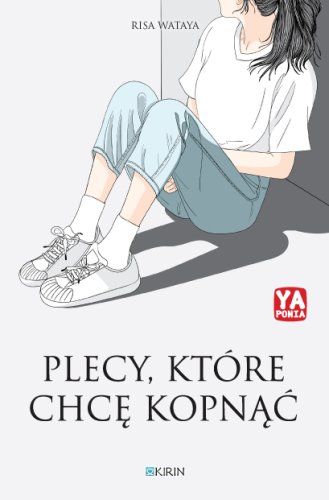
I want to kick you in the back
1.2 million copies sold in Japan!
A novel by the youngest winner of the most prestigious literary award in Japan - the Akutagawa Prize.
Loneliness has many faces.
Not all of them involve physical violence or harassment. Sometimes you just stop belonging anywhere and you find your place is outside the group.
This is what happens to Hatsu - an intelligent and cynical high school student who cannot suppress her ego to fit in with others, and her sarcastic attitude, masking her confusion, only makes her situation worse. Yet there is another person who shares her struggle - Ninagawa, a boy obsessed with a model and idol named Orichan. Hatsu's past encounter with Orichan makes Ninagawa, notice his classmate for the first time. But is being in someone else's company enough to stop feeling lonely? Is being committed to each other enough to establish a bond?
The novel written by a very young Japanese writer enchants with its style and insight. Engaging all senses, the cynic and extremely precise prose allows a reader to experience the frustration of people affected by social ostracism without resorting to excessive drama.
Translation: Joanna Weldu
About the author:
Risa Wataya (born 1984) made her debut in 2001, when she was only 17, with the novel "Install", for which she received the Bungei Award. Her second novel, "The Back I Want to Kick", which sold over a million copies, won the most prestigious literary award in Japan - the Prize. Akutagawa. Risa Wataya, then 19, became the youngest writer to receive this distinction.
|
|||||
|
Tales of Rain and the Moon
Tales of Moonlight and Rain is a collection of nine tales by the one of the most important Japanese authors of the Edo period (1603-1868), Akinari Ueda, first published in 1776. Even though the tales focus on the supernatural and they feature ghosts, apparitions and demons, in fact they present a profound social and political criticism towards the reality of Edo. While centuries have passed since their first publication, they do not cease to impress the reader with their refined style and their author’s erudition.
|
|||||
|
Kiki's delivery service
Kiki is 13 years old and wants to become a witch like her mother. To achieve this, she must undergo a period of apprenticeship – a year spent living in a place where there is not a single witch. From the moment she settles in a seemingly perfect town – the picturesque seaside town of Koriko – the resolute girl must face a variety of challenges. What kind of work can do a witch who only knows how to fly on a broomstick? How can she overcome prejudice against magic and gain people's sympathy? How can she handle the most extraordinary tasks, such as saving a New Year's tradition or transporting a set of wind instruments on a broomstick?
Discover the novel that inspired Hayao Miyazaki to create the famous 1989 animated film!
Translated from Japanese by Aleksandra Przybysz
Illustrations by Magdalena Danielewicz
|
|||||
|
Kiki's delivery service vol. 2
Kiki has successfully completed her year-long apprenticeship in a foreign town and is now a fully-fledged witch. She decides to return to Koriko to continue serving the town's inhabitants with her magic—in other words, to continue her broomstick courier service.
This time, she also faces unique challenges: delivering a hippopotamus and the song of trees, finding a scientist who doesn't even know which of a hundred islands he's on...
Discover the further adventures of Kiki, the heroine of the famous Studio Ghibli animation!
Translated from Japanese by Joanna Weldu
|
|||||
|
Re-considering the beauty. The aesthetics of Japanese calligraphy
The aim of the book is to analyze the problem of aesthetics of Japanese calligraphy. The publication explores the aesthetic value of Japanese calligraphy in the following contexts: historical and cultural, technical and artistic. The first chapter covers the development of writing system in China as well as the Japanese writing system and language. As the central issue behind the book is the beauty of Japanese calligraphy, the second chapter, focused on cultural context, examines the features of Japanese aesthetics, as well as its main categories. Following a short introduction to technical aspects of calligraphy, which constitutes the third chapter, the next one traces the spiritual aspect of calligraphy – the expression, the role of communication and perceiving the art of calligraphy as a journey, as a spontaneous act of creation, as conceptual art. The fifth part of the book is dedicated to the artistic context of calligraphy, presenting its means of expression, imagery, relation to paintings and the composition. Moreover, the aesthetic values, such as: the concept of reciprocity between the brush and the medium, as well as a concept of tangibility, three-dimensionality of calligraphy and its relation to dance and music are discussed. The final part analyzes the approach of the Westerners to the art of Japanese and Chinese calligraphy, basing on a survey, which was conducted by the Author.
|
|||||
|
The Spirit Drum
Otomaru Kunō, a brilliant drum maker, creates a unique instrument, intended as a wedding gift for his ex lover. Unfortunately, it soon becomes clear that whoever hears it play, gets cursed – but still there are many people who desire it. A century later a great grandson of Kunō, orphaned by his father, gets adopted by an elderly drum master. Despite his initial lack of interest in playing, the legend about a cursed drum starts to tempt him, too… Thus begins “The Spirit Drum”, a novella which brought fame to Yumeno Kyūsaku, one of the most interesting Japanese writers in early 20th century.
|
|||||
|
Splendor and asceticism. A guide to traditional Japanese architecture
Palaces of the nobility, medieval castles, Buddhist temples, Shinto shrines, and thatched village huts – traditional Japanese architecture captivates both the Japanese and tourists. However, to fully appreciate its beauty, it's worth understanding its secrets: planning principles, solutions ensuring durability in seismically active areas, history and foreign influences (primarily Chinese), and, of course, symbolism.
This comprehensive, richly illustrated guide covers topics such as:
• the evolution of Japanese architecture from Neolithic dugouts to UNESCO World Heritage Sites;
• characteristics, styles, and essential elements of traditional Japanese architecture;
• the relationship between architecture and nature and garden planning;
• Japanese religious architecture and its varieties;
• the oldest Japanese architectural monuments and their relative dating;
• the influence of tradition on contemporary Japanese architects.
|
|||||
|
Riku and the kingdom of white
A touching novel by Japanese best-selling author Randy Taguchi. The eleventh of March 2011 changed everything for Japan. It also changed the life of a ten-year old Riku, who was supposed to move with his father, a doctor, to a town in Fukushima prefecture, which was heavily affected by the earthquake, tsunami and the results of the nuclear meltdown. As if the very fact of changing the school and whole environment was not enough, Riku soon discovers that he has to learn to live a completely different life. Wear his facemask all the time, as well as long-sleeved shirts and long-legged trousers. Eat only the food from the scarce deliveries operated by charity organizations. Never play outside. Never open the windows. However, the story “Riku” tells is not just the story of the disaster and its aftermath. It is also a story of love, hope and restoration – against the odds.
|
|||||
|
Views. Japan as seen by the West and the West as seen by Japan
Nine authors of the book present various examples of how the West and Japan perceived each other over the centuries. The first chapter compares the narratives of two famous writers on Japan: Basil Hall Chamberlain and Lafcadio Hearn. In the second part of the book, the stereotypes and negligent acconts on Japan in Polish literature are analysed, basing on selected examplaes. It is followed by chapters on Western and Japanese themes in the works by Akutagawa Ryunosuke and on the image of a foreigner in Japanese wood-block printing. The fifth chapter analyses the impact of Japanese culture on Polish painters in lata 19th and early 20th century. Three subsequent parts focus on the cinema: Western themes in the art of Akira Kurosawa, the changing way of portraying Japan in Western cinematography and the seekin of Yasujiro Ozu's Japan in the document Tokyo-Ga by Wim Wenders. The final chapter of the book presents the idea of Japanese haragei in comparison to the Western notions of communication and dialogue.
|
|||||
|
Studio Ghibli. The place of animated movies in Japanese culture
The eighteen authors of „Studio Ghibli” reveal the phenomenon of Japanese animation, basing on the works by Studio Ghibli. They analyze one by one all its movies since Nausicaa (shot actually prior to its foundation) to Ponyo, focusing on the main themes, messages, concepts, inspirations and philosophy behind those films. They emphasize the wide range of topics as well as the mastery of animation itself. It is an indispensable source for the researchers on contemporary Japanese popular culture, film experts, but also for the fans of Japanese animation.
|
|||||
|
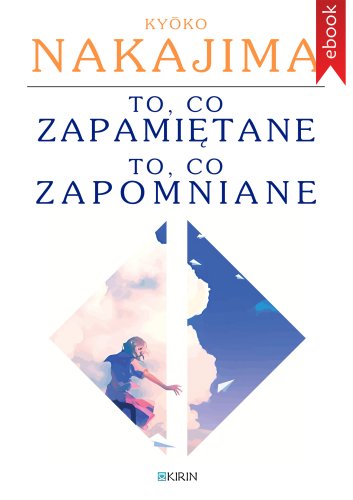
Things remembered, things forgotten
What is reality if not a mosaic of what is remembered and what is forgotten?
Ten short stories by Kyōko Nakajima, drawn from various anthologies of the Japanese writer's work, share themes of memory and its transience. The reader will find here family stories and the subjectivity of their perception; the theme of cultivating traditions despite the blurring of their meaning in successive generations; the issues of dementia and grief, as well as the capriciousness of everyday memories. The protagonists of these brilliant, yet touching and heartwarming stories are not only people but also objects, animals, and… ghosts.
"Things remembered, things forgotten" are stories that are hard to put down, and they will stay with the reader long after reading.
Translated from Japanese by Monika Szyszka
|
|||||
|
Traditional Japanese toys
The second book by the author of “Japanese dolls now and then”! This book is an ample study on traditional Japanese toys, which in most cases are unique representatives of Japanese folk art – mingei. What did Japanese children play with in the past? Were all toys dedicated to them? Which of the toys protected from smallpox, and which from internal parasites? How many of Japanese toys were actually created by the Koreans? The book answers all these and many other questions.
|
|||||
|
True Crime Japan: Thieves, Rascals, Killers and Dope Heads: True Stories from a Japanese Courtroom
There has never been a book like this in Poland!
Irish journalist Paul Murphy spent a year attending court hearings in Matsumoto, Nagano Prefecture. In his reportage, True Crime Japan, he describes selected cases that were held before the judges: a failed extended suicide, shoplifting performed by an octogenarian, the shady dealings of a yakuza member, and matricide. The author strives to present the broadest possible picture of the situation in each case, compiling interviews with police, family, and neighbors, and presenting it against a broader social backdrop.
True Crime Japan is not only a description of the crimes and atrocities themselves, but also—or perhaps above all—a pervasive image of Japanese society, where theft is considered less shameful than applying for social assistance, where death seems the only honorable way out of a spiral of debt, and where, in the eyes of the public, the most important element of atonement for the guilty is a public apology, not only from the guilty party but also from their family. It's also a fascinating window into the Japanese justice system, into the procedures for investigations, trials, and enforcement of sentences, including the most serious ones.
|
|||||
|
Utagawa Kuniyoshi and the portrait of a Japanese warrior
Olga Mądrowska’s book is the first Polish publication about woodblock print master Utagawa Kuniyoshi and his portrayal of Japanese warriors - musha-e. At the same time it is one of the few books on this genre itself. Aside from presenting the artist and his style, it covers the genre of history-themed prints, its origins, constraints, as well as the most popular topics. It is a valuable source for all researchers on Japanese history, culture and art, but also provides unique accounts on the impact of Kuniyoshi’s art on contemporary Japanese popular culture.
|
|||||
|
Culture Trouble: The Contemporary Art of Japanese and Chinese Women
„Culture Trouble” is a paraphrase of the title of a book by Judith Butler, “Gender Trouble”, an important publication for the humanistic thought, which discussed the impact of gender on the individual’s identity. The aim of this book was to analyze the art of selected Japanese and Chinese female artists in the context of their native culture.
|
|||||
|
In the shadow of the Great Wave. Essays on woodblocks and printing
In the West the art of Japanese woodblock printing is studied mostly in regards to landscapes or portraits. However, in reality this medium covered much wider range of topics and served diverse purposes. This anthology of eight essays presents, among others, the issues of the influence of Western art on Japanese woodblocks, their role in military propaganda, the production of erotic images dedicated to soldiers or the relation between the classic representations of Japanese samurai and the illustration of military men in early 20th century. One chapter is also focused on printed books, which had a considerable share of the publishing market in Edo period.
|
|||||
|
Last night's curry tomorrow's bread
Kazuki is dead…
But that doesn't mean life can never be good again, does it?
After the illness took twenty-five-year-old Kazuki, his loved ones try to live as if nothing has changed. Widowed Tetsuko still lives with her father-in-law and refuses to remarry. Kazuki's father, also a widower, craves for opportunities for romance as it helps him to forget about inevitable ageing. Torao, who looked up to Kazuki, would rather put his own relationship at stake than to let go of the only memento of the deceased. And yet, although they dream of freezing their existences in time like a flower immersed in resin, life goes on, whether they want it or not.
This subtle story intertwines the fates of different people, their big and small dramas, ways of coping with loss and accepting that the passage of time and the changes that life brings are simply beyond one's control.
Translation from Japanese: Lena Czesak
|
|||||
|
Evening festival and other fairy tales
A slightly disabled boy decides to plant a forest. • An unexpected guest appears at a festival dedicated to the mountain god. • A greedy factory owner tries to use a gullible elephant. • The rivalry of three arrogant Cave Bear students ends in a grotesque way. • A small child who lost his way in a snowstorm receives unexpected help.
Kenji Miyazawa, a beloved writer of both Japanese children and adults, passed away at the age of 37, completely unknown. His fairy tales and poems got discovered shortly after his death and from now on are incessantly reprinted and translated into numerous languages. They charm the reader with the beauty of their language, with an unwavering faith in the goodness in people's hearts, and with their unparalleled poetics. They teach that true happiness does not depend on wealth or honors, and that what we leave behind in this world say more about us than our earthly achievements.
|
|||||
|
Representations of masculinity in visual kei
Visual kei is a trend in Japanese underground music, defined by the image of the musicians, as well as the esthetics of their concerts, CDs and video clips, rather than by the kind of music they actually play. The artists within this genre dress gaudily and fancily, wear heavy makeup and often act androgynously. In order to explore this phenomenon, the Author seeks the sources of defining the masculinity in Japan, the ways of its expression, as well as the inspirations for this genre – from glam rock to gothic and baroque, from kabuki theatre to the esthetics of kawaii (cuteness) and ero guro (erotic grotesque). Visual kei is a kind of fairy tale in which numerous ideas from all possible sources of inspiration combine their power to create a story about beauty.
|
|||||
|
Warriors of old Japan and other stories
First Polish antology of legends about great Japanese warriors – the archers Tametomo and Yorimasa, generals Raikō and Yoshitsune, a brave monk Benkei, as well as many others. They tell about warriors’ courage, courtiers’ wisdom and eloquence as well as women’s faithfulness and chastity. Their heroes fight enemy clans as often as they face demons of all kinds. The memory of them survived to this day not only in a form of legends, but also in other products of folk activity, which helped to promote their virtues among younger generations.
|
|||||
|
Introduction to Japanese Sign Language
This publication covers a completely unknown world of deaf-mute people in Japan. It also provides a mini-dictionary of Japanese Sign Language.
|
|||||
|
Exit 8
INFORMATION
Do not ignore any anomalies.
If you notice an anomaly, turn back immediately.
If you do not notice any anomaly, do not turn back .
The way out is through the exit number 8.
A stuffy, claustrophobic psychological thriller from a bestselling Japanese author.
A nameless man gets lost in the subway's underground corridors, wandering them as if in an endless, loop-shaped maze. His only clue is an enigmatic information board telling him to look for "anomalies" and head for the elusive "exit number 8." The symbolic anomalies he encounters along the way are sometimes unsettling, but sometimes downright terrifying...
The book is based on the popular computer game, which also got adapted into a film appreciated by the critics - Exit 8 (2025).
|
|||||
|
AFRICAN SAMURAI - The True Story of Yasuke, a Legendary Black Warrior in Feudal Japan
Little is certain about him aside the fact that he really existed. He arrived in 1579 to Kuchinotsu on a Portuguese ship, serving as a guard to Alessandro Valignano, Jesuit missionary and the Pope’s visitor to Christian missions in Asia. As documents state, he was 6 shaku and 2 sun (over 190 cm) tall. Even today he would be considered tall, but to his contemporary he must have seemed a giant. Two years later, in a concurrence of circumstances, he faced the most powerful man in Japan, Oda Nobunaga, and became a member of his entourage. He accompanied his master in the peak of his fame and military successes and then in his downfall and a tragic death. He was called Yasuke and became the first African samurai.
|
|||||
|
The Yotsuya Kwaidan or O'Iwa Inari
The most famous and classical Japanese ghost story based on a legend from 18th century about a woman seeking revenge on her tormentors. This history had a momentous impact on Japanese culture; it served as a source of inspiration for kabuki theater, woodblock prints (including the ones by Katsushika Hokusai) and more recently – for „Ring” movie series.
|
|||||
|
Changes to the notion of masculinity in Japan from 1950 to 2021
Over the centuries Japan has developed numerous notions of masculinity, which reflected the current social situation, political factors, prevailing fashion, as well as the stage of cultural development. In the mid-20th century the country, which recovered from post-war ruin and was aiming for the title of a global power, relied mostly on the salarymen: neat white-collar workers who were ready to sacrifice their free time and their families for the sake of their companies. However, over the course of half a century, this ideal was repeatedly contested, which resulted in the emergence of alternative, in some cases even extreme concepts of masculinity, based on such values as family life, beauty, or even asexuality.
The book presents the most important concepts of masculinity which were developed in Japan between 1950 and 2021, the reasons for their emergence, as well as their presence in public space, in the form of television commercials and fashion magazines.
|
|||||
|
Doctor's Wife
Hanaoka Seishū (1760–1835) was a distinguished Japanese surgeon who was the first in the world to develop an effective anesthetic. This also led him to pioneer procedures under general anesthesia – tumor removal, amputation, and even plastic surgery.
However, the story of his successes is also a story of the suffering and immense sacrifice of the women around him on whom he conducted experiments. Sawako Ariyoshi (known to the Polish Reader from "Years of Darkness") pays tribute to them in her novel, making them her main characters.
Translated from Japanese by Anna Grajny
|